Affiliate marketing is a way to earn commissions by promoting someone else’s product or service. When a customer clicks your unique affiliate link and makes a purchase, you get paid — no upfront investment required. You can start for free using social media, YouTube, or a blog.
Affiliate marketing for beginners is one of the most accessible ways to earn income online. You don’t need a product, a team, or even a budget to get started. All you need is a platform, some consistency, and a willingness to learn.
This guide walks you through everything — from what affiliate marketing actually is, to exactly how to land your first commission step by step. No fluff, no hype. Just a clear, honest roadmap built for 2026.
What Is Affiliate Marketing? (And How Does It Work?)
Affiliate marketing is a performance-based income model. You promote a business’s product or service, and when someone buys through your unique tracking link, you earn a commission. Simple as that.
The business only pays when results are delivered — meaning there’s no risk for them, and low risk for you. It’s one of the reasons it has become one of the fastest-growing income models on the internet.
The 3 Players: Affiliate, Merchant, and Customer
The whole process is a simple three-step system that involves:
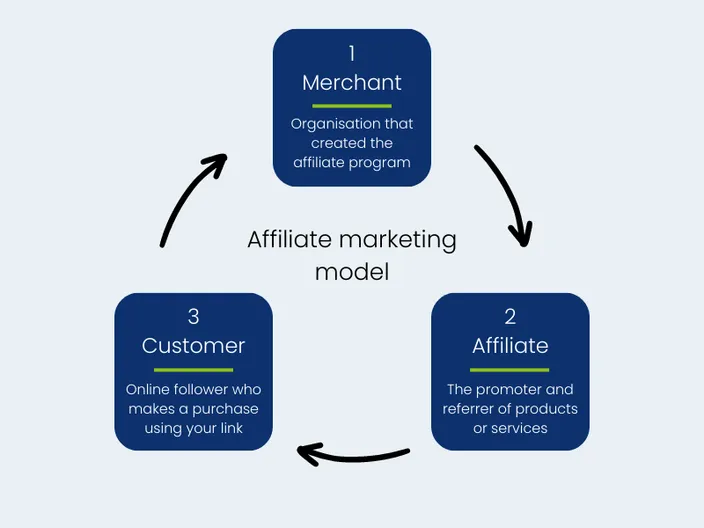
Every affiliate marketing arrangement involves three parties:
- The affiliate (you) – promoter and referrer of products or services
- The customer (a follower) – someone who follows you online and makes a purchase using your link
- The merchant (the creator) – the person or organisation that sells the product or service and created the affiliate programme.
How Affiliate Links Track Your Commissions
It’s important to note that you only get commission if there’s been a sale directly from your link.
For example, if you’re punting a new pair of reading glasses and someone purchases it in-store after you told them about it, you won’t get any commission. So, with that in mind you want to make sure your affiliate link is always accessible to your followers.
As you’d expect, not all affiliate programmes are the same. The rewards you get will differ from programme to programme. They might also change over time. Some programmes might also pay out for repeat customers.
These are some of the rewards you can usually expect with an affiliate programme:
- Cash commission (a fixed amount or a percentage)
- Free products or services
- Experiences related to the product or service
As with everything, of course, there are pros and cons. Let’s take a look at some of those.
Is Affiliate Marketing Worth It in 2026?
Short answer: yes — if you approach it correctly. Here’s an honest breakdown of both sides.
What are the pros of affiliate marketing?
Usually, for something to be a good business idea it needs to have more pros than cons. Those pros also need to outweigh the cons in terms of how good they actually are. Fortunately, that’s the case with affiliate marketing.
1. Low or zero-cost business idea
One of the biggest draws for affiliate marketing is that you can do it without spending a cent.
All you need is a platform that produces content. This can be a social media outlet or a website. A website will have some small costs involved, but nothing that breaks the bank. It’ll be things like buying your domain and your hosting fees.
If you choose this route check out our hosting packages for an unrivalled hosting experience—HostAfrica offers web hosting, WordPress hosting, and LiteSpeed hosting to get your site up and running quickly.
Whatever you choose, as long as you create a steady stream of traffic, your affiliate link will be working for you.
2. It’s a billion-dollar industry
A billion-dollar industry waiting for you to get your cut. It’s estimated that affiliate marketing will be worth $13 billion dollars (₦5.9 trillion) by the end of 2023. Based on how it’s been growing, don’t expect that number to get any smaller.
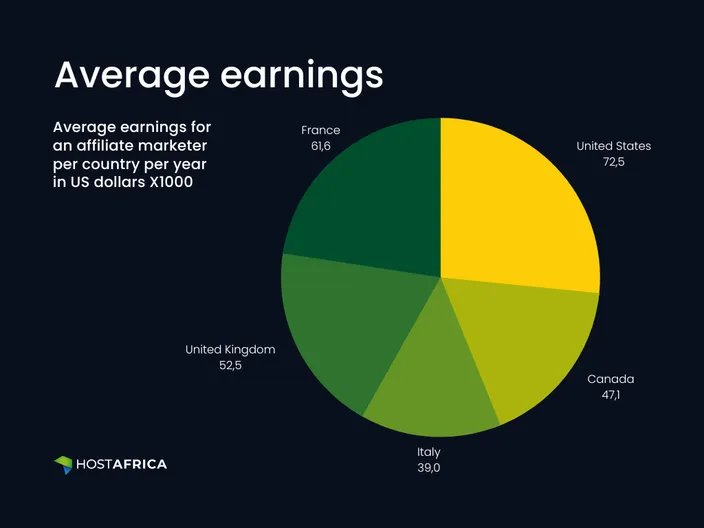
In the U.S, the average affiliate marketer makes around $72.5k (₦33 million) per year. In France, U.K, and Italy they make $61.6k (₦28 million), $52.5k (₦24 million), and $39k (₦17 million) per year respectively.
3. You don’t need to be a marketing expert
You don’t need a degree or diploma to get started with affiliate marketing. Sure, it’ll help, but it’s definitely not required.
The most successful affiliate marketers find their sweet spot by just being honest about the product and themselves. Simply sharing your experiences about a product or service honestly is marketing.
You can hedge the bets in your favour by learning some key marketing tips. Mostly though, people will be guided by your honest experience.
4. Mobile and convenient second source of income
You can manage your affiliate marketing gig from anywhere. That also means you can earn money from anywhere. You won’t be tied down to specific locations (unless you’re promoting suntan lotion, in which case you’ll likely need a sunny area).
It also means you don’t have to leave your current job. Just a little extra effort and time on social media or your website will ensure it’s up and running. Once it has traction, regular maintenance will turn it into a sort of passive income.
What are the cons of affiliate marketing?
There are some downsides to affiliate marketing as well.
1. Competition can be everywhere
Some of the same reasons that got you started could work for someone else as well. Because of the low barrier of entry, the market for a specific niche you choose could have many other people.
Some of these people could also be doing it full time or have some expertise in the specific field. That may make things a bit more competitive. Remember that persistence and hard work will put you further ahead of many of your competitors.
2. You don’t control the reward
Since you’re just an affiliate, you have no control over the rules or rewards the merchant sets out. Your only option is to follow them and possibly suggest changes if you have a large enough following.
You also can’t impact the product’s quality if it takes a sudden downturn. That means you could be promoting something you don’t believe in.
3. You build someone else’s business
Instead of using your platform to build your own business, you build someone else’s. This isn’t always a bad thing, but your reputation is creating trust in someone else’s product or service. You could be using your reputation to build your own business.
While people may still trust your word, that customer could’ve been a recurring client for you.
How to Start Affiliate Marketing for Free — Step by Step
Like we said, you don’t need a cent to get started with affiliate marketing. Although, if you choose to spend some money on a domain and website that will certainly help things along.
The thing about doing it the free way is that you’ll need to constantly be growing your following or be networking. This is because the business model needs you to drive new customers to the merchant.
This also means you’ll have to know some of the basics of marketing. In a nutshell, what can you do to drive a customer into a profitable action? If you aren’t sure, there are plenty of resources online that can give you a good introduction to marketing.
If you aren’t marketing yourself well or getting more people to follow you, you’re going to quickly run into problems.
One thing to note is that you won’t usually gain from recurring customers. That’s because once customers buy via your link, they’ll likely go directly to the site next time. That means no affiliate link and no commission for you.
With that in mind, we’d strongly recommend getting a website. Website content can have a much bigger impact and be evergreen. More importantly, it won’t get lost in people’s feeds after a few days, along with your link. It’s also a lot more scalable.
Your best bet is going with both a website and social media. The steps we laid out below work for either.
Step 1: Choose Your Niche
A niche is the specific topic area you’ll focus on. Choosing the right one is the single most important decision you’ll make as a beginner. Get this right and everything else becomes easier.
Pick a niche that sits at the intersection of three things: something you’re genuinely interested in, something with a real audience, and something with affiliate programmes available.
Popular beginner-friendly niches include:
- Personal finance and investing
- Health, fitness, and wellness
- Technology and software (SaaS products pay particularly well)
- Home improvement and DIY
- Beauty, skincare, and lifestyle
- Web hosting and online business tools
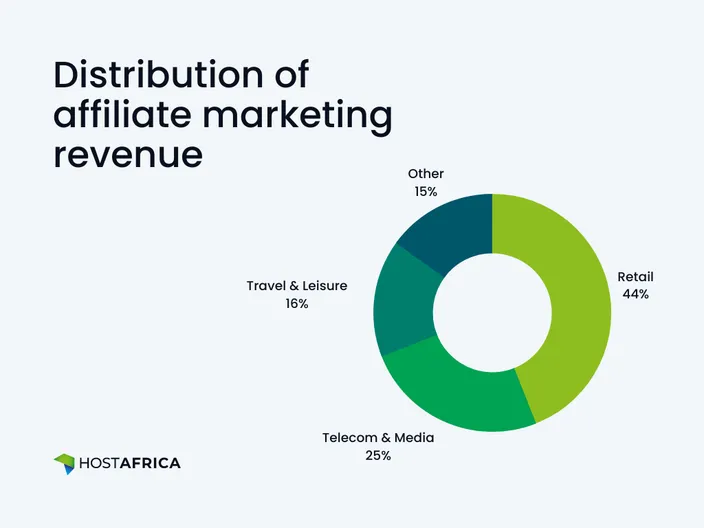
These are some of the broader niches, and they’ll be super competitive. Your chances of success will be higher if you narrow it down a bit further. Here’s some examples of niches within the broader ones we just mentioned:
- Clothing
- Gardening
- Hardware
- Investing
- Cycling
- Natural skincare
You can narrow it down even further.
Generally, you want to stay away from ‘get-rich-quick’ programmes. You also shouldn’t be paying to become an affiliate.
Step 2: Pick Your Traffic Channel
Once you’ve settled on a niche, you need to decide which traffic channel will be best for you as an affiliate.
That means you’ll need to know a bit about the channel you choose. Questions like:
- What’s the channel’s main medium?
- What type of people usually visit this channel?
- Can I create content reliably using this channel?
- What is the channel primarily used for?
Those types of questions are good to get you started. As an example, if you choose a niche in wildlife photography, a visual traffic channel like Instagram would work well. You absolutely need to choose a channel where your audience will engage with you.
Like we mentioned this means doing some research into each channel or platform. You wouldn’t sell fizzy, sugary drinks at an elite training centre. In the same way, you want to be on a platform that compliments:
- What you’re trying to sell
- The type of content you create
- The type of engagement you want to have
As you can imagine, a fizzy drinks company won’t have much engagement at an elite training centre. Once you’ve done your research, settle on the best choice and commit to it.
Choose only one, at most two, traffic channels for your affiliate link(s).
Doing more than that will be spreading yourself too thin. If you’re already active on a specific channel, just pick it up from there. If you want to get on more channels, use it to support your primary one or two.
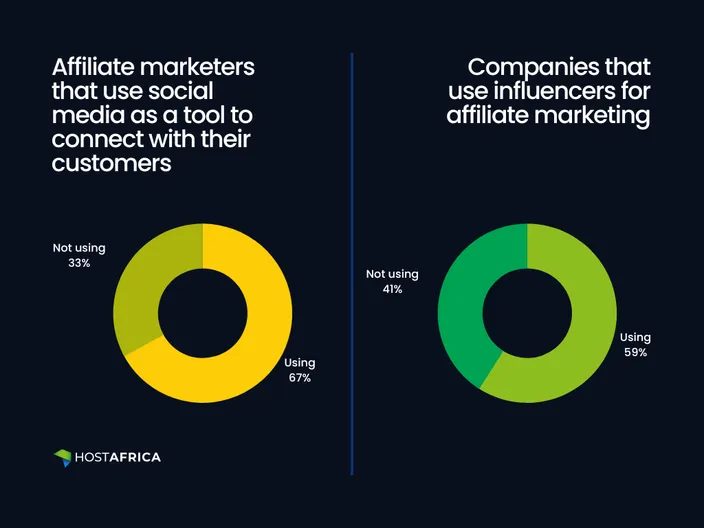
One thing you’ll want to invest some time in is SEO (Search Engine Optimization). Paying attention to SEO will increase the chances of your posts and content being seen. The more people see your post the more times your affiliate link might get clicked.
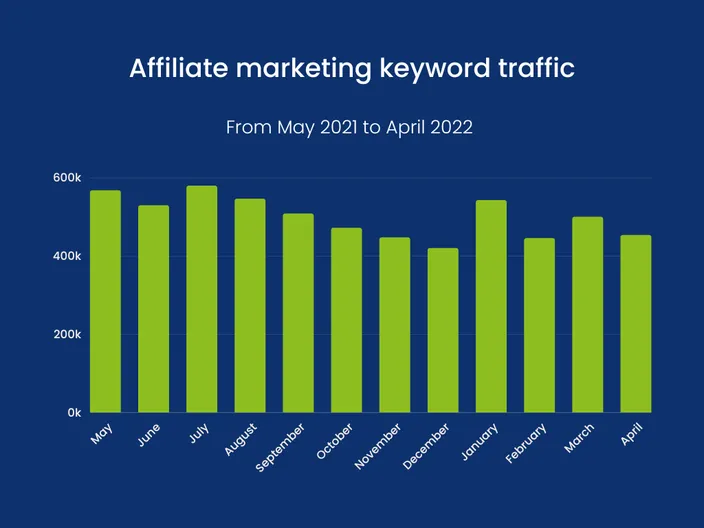
Some good free platforms to think about are:
- TikTok
- YouTube
- Google (or your website, more specifically)
Each of these will have a different audience or demographic. Research and figure out which platform will suit your niche best.
Options like Google and YouTube are harder to rank well for. The payoff for those two, however, can mean traffic to your content for years to come.
A route like LinkedIn has a more professional audience. So, a niche centred around that would do well on this platform. These are just some simple examples of how you and what you should consider when choosing.
You’ll need awesome content for whatever traffic channel you decide on for your affiliate marketing programme. That’s non-negotiable.
Step 3: Create Content That Builds Trust
Whatever platform you end up going for, you’ll want to find a good balance of entertaining and informing content. Depending on the platform it can tip either way on the scale.
For example, content on TikTok will probably lean more on the entertaining side. Content on LinkedIn will likely be more informative. Whichever you choose, your content absolutely must be awesome.
Half-hearted content that’s the same as everything else will put you in the same pool with everyone else.
Your content goal should be to create a trustworthy brand for yourself. People should consume your content and trust what you say. If people don’t trust or respect what you’re saying, why would they click on your affiliate link?
After all, your affiliate link is essentially recommending a product or service.
Some things you can do to make your content resonate with your readers are:
- Understand your audience
- Know what your audience’s pain points are, as well as their preferences
- Check out the competition and see where you can improve or do something different
- Be patient and honest
Another thing you can do is try and create extra content. Life happens, and some days you can be more motivated than other days. You may want to raincheck putting in the work, but if you have content prepared you won’t have to.
Even if you don’t have anything prepared, power through your unmotivated state. Consistency is the name of the game, so do your best to pump out your best work on schedule.
If you’re looking for some resources on creating awesome content, check out some of the blog posts we’ve written:
Those will give you some good insights.
Step 4: Join an Affiliate Programme
Once your platform is set up and you’ve published a few pieces of content, it’s time to apply for affiliate programmes. Here are the most beginner-friendly options:
| Programme | Commission | Cookie Window | Best For |
|---|---|---|---|
| Amazon Associates | 1%–10% per sale | 24 hours | Physical products, wide range |
| ShareASale | Varies by merchant | 30–90 days | Software, retail, lifestyle |
| CJ Affiliate | Varies by merchant | 30–90 days | Major brands, finance |
| ClickBank | 25%–75% per sale | 60 days | Digital products, courses |
| Rakuten Advertising | Varies by merchant | Varies | Fashion, travel, retail |
| HostAfrica | signing bonus + 5% lifetime | Ongoing | Web hosting referrals |
Most programmes are free to join. Never pay to become an affiliate — any programme that charges a sign-up fee should be avoided.
Step 5: Promote Your Affiliate Links
Your awesome content and SEO efforts will take some time to snowball. Help it along by screaming about your content from the roofs. Not literally, obviously.
You’ll want to create awareness for your content in as many places as possible. This is where those other social media and traffic channels come into play.
Use them to share and boost the content for your main traffic channel. But don’t just use those other accounts to share your content. Interact on forums or discussions if possible.
Comment on other people’s posts, build relationships. You want to be known as an active part of your niche community. The only way to do that is to be active in it. This is a solid way to build your reputation within a niche.
What you don’t want to do is spam people with your affiliate link or content on their posts. Be sincere in your interactions. Nobody will trust or respect you if you chime into discussions or posts with your affiliate link.
Step 6: Scale What’s Working
When you feel your following is big enough, then start with your affiliate marketing programme. It might’ve taken a while to get there, but you earned your reputation.
With that reputation comes the power to influence people’s purchasing decisions. At this time, you’ll want to try scaling your affiliate business. Get someone to help with the content creation or an assistant to help run things.
Getting some software or apps that can streamline your process will also help scale things. For example, if your main traffic channel was on Instagram, you could get some photo editing software.
That would increase your content quality, and you’ll also upskill yourself. Another option would be taking a couple of online courses. There’s a wealth of experts and information out there, waiting for you. If you have a chance to learn, you should take it.
Join the HostAfrica Affiliate Marketing Programme
If you weren’t aware, here at HostAfrica we also have an affiliate programme.
Any new signing will bag you a ₦8,500 signing bonus. That’s for any referral you make that results in a sale. We also give you 5% commission for your referral’s service for the life of that service.
That means you can earn residual income the more referrals you make.
Check out all the details on our affiliate programme page.
Basic SEO for Affiliate Marketers
If you have a website or blog, understanding basic SEO is one of the highest-return skills you can develop. SEO is what makes your content appear in Google search results — bringing you free, consistent traffic without ongoing effort.
You don’t need to become an expert. Just focus on these fundamentals:
- Keyword research — Use free tools like Google’s autocomplete, AnswerThePublic, or Ubersuggest to find what your audience is searching for.
- Include your target keyword — Use it naturally in your headline, first paragraph, and a few times throughout the article.
- Write long, thorough content — Articles over 1,500 words tend to rank higher because they answer questions more completely.
- Internal linking — Link between your own articles to help Google understand your site structure and keep readers engaged.
- Page speed — Slow pages rank lower and lose readers. Compress images and use fast hosting.
Top Tips for Affiliate Marketing Beginners
Be Consistent, Not Perfect
The biggest killer of affiliate marketing careers is waiting for everything to be perfect before publishing. Post consistently. A steady stream of good-enough content beats a trickle of perfect content every single time.
Build Trust Before Selling
Publish at least 5–10 helpful pieces of content before placing affiliate links anywhere. Your audience needs to trust your judgment before they’ll act on your recommendations.
Disclose Your Affiliate Relationships
This isn’t just good ethics — it’s legally required in most countries. Add a clear, simple disclosure at the top of any content that contains affiliate links. Something like: ‘This article contains affiliate links. If you make a purchase, I may earn a small commission at no extra cost to you.’
Track Everything
Use UTM parameters or your affiliate dashboard to track which content drives the most clicks and conversions. Data removes guesswork and shows you exactly where to focus your energy.
Avoid Get-Rich-Quick Schemes
If an affiliate programme promises fast money with no effort, it’s almost certainly not worth your time — and could damage your reputation. Stick to legitimate products from brands your audience would genuinely benefit from.
Final Thoughts: Is Affiliate Marketing Right for You?
Affiliate marketing is one of the few genuine low-risk, high-reward income opportunities available online. You don’t need experience, qualifications, or capital to start. What you do need is patience, consistency, and a real desire to help your audience.
The people who succeed in affiliate marketing aren’t necessarily the best marketers or the loudest voices. They’re the ones who show up consistently, build genuine trust, and choose products they’d actually recommend to a friend.
Start with one niche. Choose one traffic channel. Publish consistently. Build trust. Then scale what’s working.
That’s the entire playbook — and it works.
Frequently Asked Questions
How long does it take to make money with affiliate marketing?
Most beginners see their first commission within 3–6 months of consistent effort. Meaningful, reliable income typically takes 6–12 months. The timeline depends heavily on your niche, content quality, and how consistently you publish and promote.
Do I need a website to start affiliate marketing?
No — you can start with a free social media account on Instagram, TikTok, YouTube, or Pinterest. However, a website gives you more control, better SEO potential, and longer-lasting content. Most successful affiliate marketers eventually combine both.
Which affiliate programme is best for beginners?
Amazon Associates is the most popular starting point because you can promote millions of products and your audience already trusts the brand. For higher commissions on digital products, ClickBank and ShareASale are strong choices. For Nigerian-based beginners, the HostAfrica affiliate programme offers a ₦8,500 signing bonus plus 5% lifetime commission.
Can I do affiliate marketing with no money?
Yes. Free platforms like TikTok, YouTube, Instagram, and Pinterest let you build an audience and post affiliate links at zero cost. If you can invest a small amount in a domain and hosting, a website will give you far more long-term leverage — but it’s not required to begin.
How many followers do I need to start affiliate marketing?
There’s no minimum follower count. Many affiliates make their first sale with fewer than 500 followers. A small, engaged, niche audience converts far better than a large, disengaged one. Focus on relevance and trust, not raw numbers.